




- NYCU Partners with Siemens Taiwan and Mega Flow to Build AI-Driven Engineering Simulation Platform
- NYCU and TVGH Announce New Asian Guidelines Lowering Sarcopenia Screening Age to 50
- Taiwan’s First Homegrown Satellite “FS-8A” Reaches Orbit — NYCU Highlights the Power of Talent Behind the Nation’s Space Ambitions
- NYCU Prof. Yu-Chung Tseng Wins First Prize at Musica Nova 2025
- NYCU and Nobel Laureate Unveil Breakthrough Algorithm to Accelerate Protein Structure Search and Drug Discovery
NYCU College of Nursing Expands Global Footprint with High-Level Exchanges from the U.S., Australia, and the Philippines
(中央社訊息服務20251211 10:52:07)In a landmark series of international engagements this November, National Yang Ming Chiao Tung University (NYCU) strengthened its role as a rising hub for global nursing education. Within just ten days, the College of Nursing welcomed delegations from the University of Washington (USA), Mapúa University (Philippines), and the University of Tasmania (Australia)—covering topics from DNP curriculum reform to immersive simulation training and health literacy innovation.
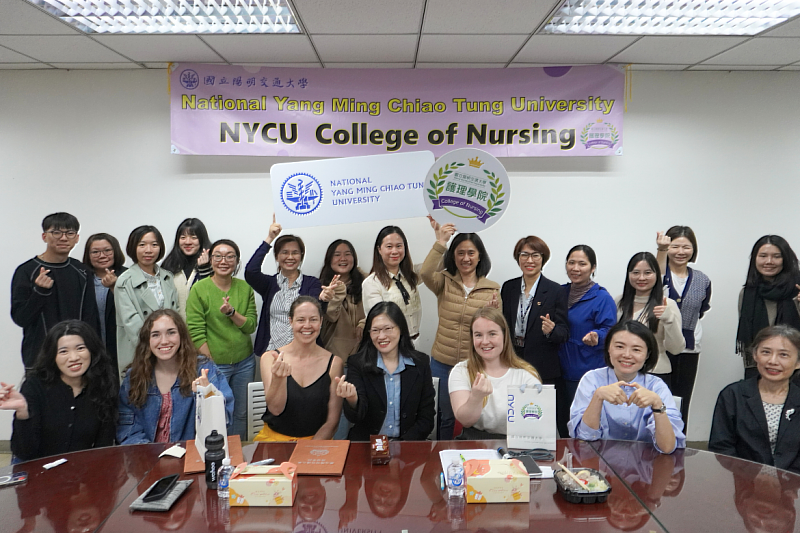
On November 19, Professor Elizabeth Thompson, Dean of the University of Washington School of Nursing, delivered a keynote lecture titled “The Doctor of Nursing Practice in Evolution: The University of Washington’s 3.0 Revision.”
Thompson outlined UW’s newest redesign of its DNP program, emphasizing competency-based learning, stronger clinical–research integration, interprofessional training, and leadership preparation for increasingly complex global health systems.
The visit concluded with discussions on joint modules, student mobility, bilateral workshops, and future cross-national research collaboration, marking a strong beginning for deeper ties between UW and NYCU.
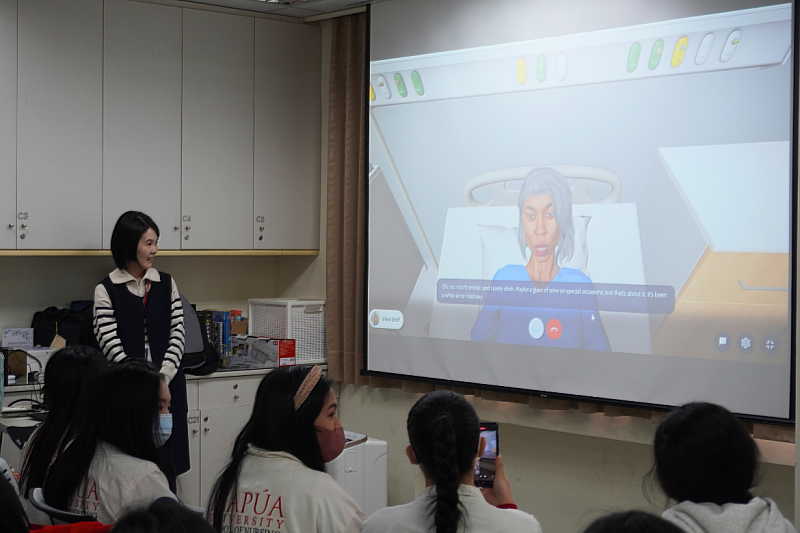
On November 20, a 50-member delegation from the Mapúa University School of Nursing visited NYCU for hands-on simulation-based training.
Students rotated through four experiential learning stations—ambulance emergency care, IV cannulation, virtual reality ward assessment, and neonatal care—experiencing NYCU’s high-fidelity clinical training environment. Many noted that the immersive approach offered new perspectives on cross-cultural nursing education.
Both universities expressed interest in developing short-term exchanges, joint courses, shared teaching resources, and collaborative research, signaling strong momentum for continued partnership.
On November 28, NYCU co-hosted the seminar “Embedding Health Literacy in Practice” with the University of Tasmania, featuring Dr. Nash and Dr. Evans.
The speakers highlighted real-world work on Organisational Health Literacy Responsiveness (OrgHLR)—a model that enhances a health system’s capacity to communicate clearly, respond sensitively, and support diverse populations. They shared strategies, including co-design with communities, culturally sensitive communication, and empowering clinical staff to reduce health disparities.
Active exchanges followed the implementation of health literacy in clinical settings, cross-cultural communication, and community-based practices. Both universities plan to further collaborate in joint research, faculty exchange, and curriculum development.
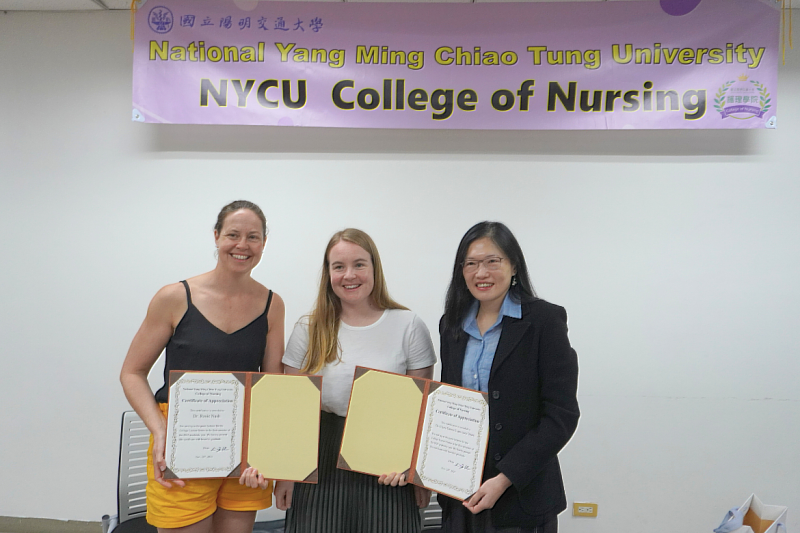
Together, these three international engagements underscore NYCU’s expanding influence in the Asia-Pacific nursing education landscape—from advanced practice training and simulation pedagogy to health literacy and community health innovation.
The College of Nursing reaffirmed its commitment to building global partnerships that cultivate nursing professionals with clinical excellence, research literacy, cultural sensitivity, and international vision.