




- NYCU Prof. Yu-Chung Tseng Wins First Prize at Musica Nova 2025
- NYCU and Nobel Laureate Unveil Breakthrough Algorithm to Accelerate Protein Structure Search and Drug Discovery
- NYCU’s Tech-Art Innovation Takes Center Stage Across Europe and Asia
- NYCU College of Management Wins 2025 WRDS Innovation Award
- From Rising Rankings to Global Presence: NYCU’s First Showcase at the QS Asia-Pacific Summit Exhibition
Taiwan’s First Homegrown Satellite “FS-8A” Reaches Orbit — NYCU Highlights the Power of Talent Behind the Nation’s Space Ambitions
(中央社訊息服務20251202 15:54:38)On November 29, after five launch delays and years of coordinated efforts across industry, government, and academia, Taiwan reached a historic milestone today as FORMOSAT-8’s first satellite, “FS-8A (齊柏林衛星)” successfully lifted off and entered orbit aboard a SpaceX Falcon 9 rocket from Vandenberg Space Force Base in California. As the nation celebrates the start of its first domestically built optical remote-sensing satellite constellation, National Yang Ming Chiao Tung University (NYCU) underscores a crucial message: the future of Taiwan’s space industry depends on building a robust talent pipeline—beginning on university campuses.
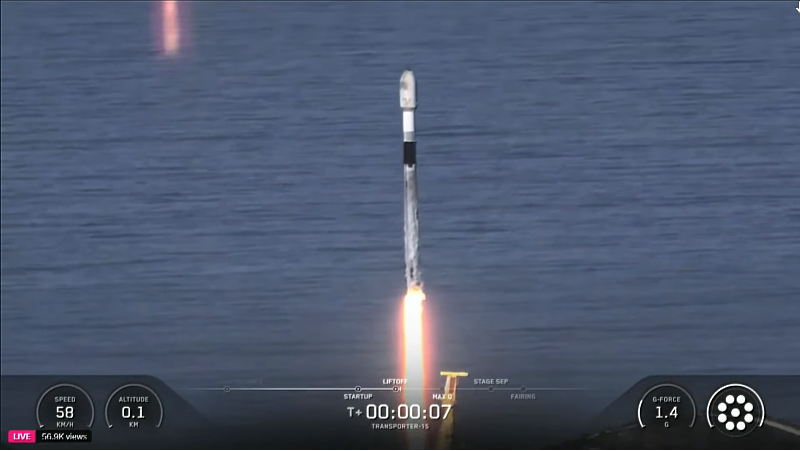
The FS-8A satellite is the first of eight spacecraft in the FORMOSAT-8 constellation, designed to deliver high-resolution, high-frequency Earth-observation imagery for land-use planning, disaster response, climate monitoring, and national security.
Moments before liftoff, Dr. Jong-Shinn Wu, Director General of the Taiwan Space Agency (TASA) and professor at NYCU’s Institute of Space Systems Engineering (iSSE), acknowledged the emotional weight of the moment, noting, “Watching your own ‘baby’ prepare to leave Earth is nerve-racking. FS-8A represents countless hours of dedication from Taiwan’s space community, and today marks a critical step toward our nation’s independent satellite-building capability.”
Wu emphasized that FS-8A’s development reflects Taiwan’s rapid maturation in satellite engineering. The spacecraft’s components reached an 84% domestic content rate, drawing on expertise from 33 Taiwanese industry, government, research, and university partners. Once all eight satellites are deployed by 2031, FORMOSAT-8 will form a global, high-revisit optical imaging network, capable of capturing the exact location up to three times per day—a dramatic upgrade from FORMOSAT-5’s 2-meter resolution.
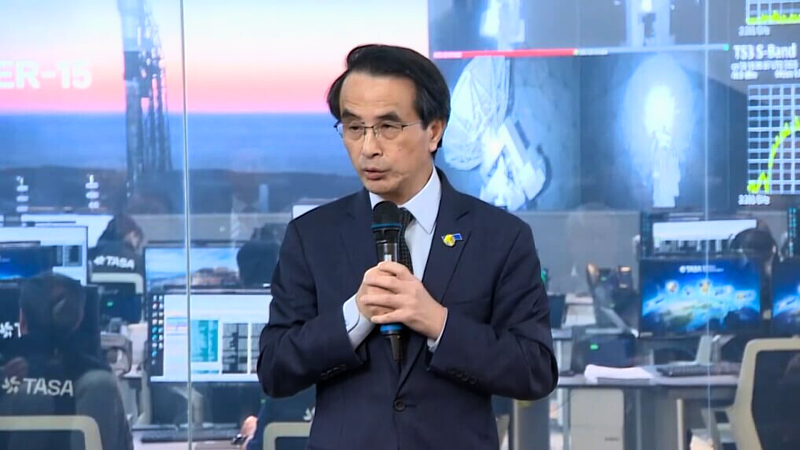
As Taiwan scales up its space ambitions, NYCU is playing a pivotal role in cultivating the country’s next generation of aerospace professionals.
NYCU President Chi-Hung Lin stressed that the global race in space technology is ultimately a race for talent—and Taiwan must start preparing early: “The competition in the space industry is not only about rockets or satellites—it is about people. The foundation begins at universities, where students learn to dream boldly and engineer with rigor. Talent cultivation is where Taiwan’s long-term competitiveness truly lies.”
To address this need, NYCU founded the iSSE—one of Taiwan’s few academic programs dedicated to end-to-end space systems design, from spacecraft architecture to mission planning and operations. iSSE brings together faculty with direct experience in national satellite missions, including leadership roles on TASA.
Beyond engineering, NYCU’s interdisciplinary strengths—spanning remote sensing, AI, earth sciences, electronics, and data analytics—position the university as a comprehensive ecosystem for future space talent.
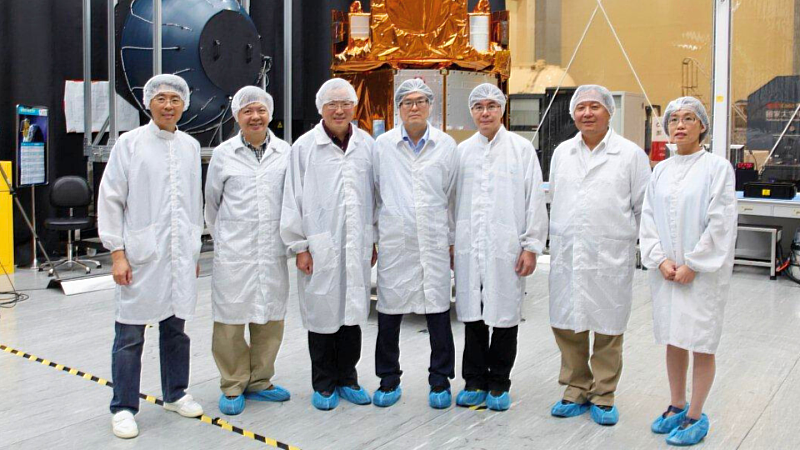
NYCU faculty have contributed directly to the FORMOSAT-8 mission. Prof. Peter T.Y. Shih, a remote-sensing expert from the Department of Civil Engineering, served as a technical advisor throughout FS-8A’s development. With more than 30 years of collaboration with TASA, he provided critical input on imagery calibration and user-centric requirements.
Shih noted that satellite image quality depends on two key processes: radiometric calibration, which ensures accurate spectral measurements, and geometric calibration, which aligns spatial coordinates after data retrieval. He emphasized that viewing an image alone is insufficient—engineers must understand how users apply the data and the precision required for real-world decisions to make satellite products truly valuable. Shih has also helped broaden space education by co-initiating Taiwan’s first high school “Remote Sensing Micro-Curriculum,” designed to strengthen scientific literacy for the space era.
FORMOSAT-8 consists of six 1-meter optical satellites and two sub-meter high-resolution satellites scheduled for gradual deployment from 2025 to 2031. Compared with FORMOSAT-5, the new constellation offers higher resolution, more frequent revisit times, global imaging coverage, and faster response capabilities for national needs.
For Taiwan—which relies on satellite imagery for disaster assessment, infrastructure planning, environmental monitoring, and homeland security—this capability represents strategic technological sovereignty.
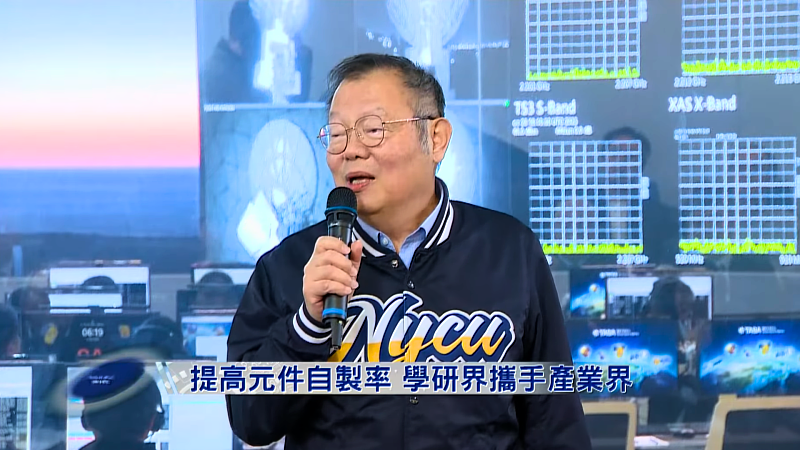
As FS-8A begins its journey in orbit, NYCU reaffirms its commitment to cultivating the engineers, scientists, and innovators who will drive Taiwan’s next chapter in space development, marking a confident step into a new era of national space capability—strengthened by the research excellence, technical expertise, and talent development efforts of universities like NYCU.