

- NYCU Alumnus Huang Yi Named Finalist at 2026 Bologna Children’s Book Fair Illustration Exhibition
- NYCU Partners with Taipei and New Taipei Metro to Advance Smart Transportation and Talent Development
- NYCU Advances Taiwan–Japan Semiconductor Co-Creation at SEMICON Japan and Strategic Investment Forums
- New Taipei Metro and NYCU Partner to Advance AI-Driven Smart Rail Operations
- NYCU to Establish AB-BNCT Center to Expand Taiwan’s Cancer Precision Medicine Capacity
NYCU Self-Healing Functional Fabric to Weave an Eco-Friendly, Sustainable Future
(中央社訊息服務20260121 15:59:13)Recently, “fast fashion”—characterized by rapid production, shortened fashion cycles, and affordable consumption—has significantly reshaped the traditional textile and apparel industry ecosystem. The resulting controversies regarding manufacturing pollution, water resource depletion, and the massive recycling and disposal of waste have prompted global academia and industry to continually rethink how to strike a balance between commercial interests and environmental protection.
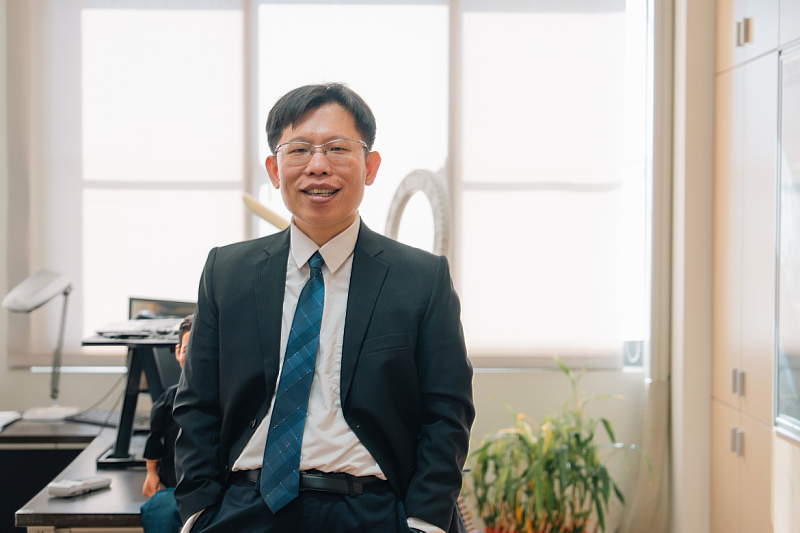
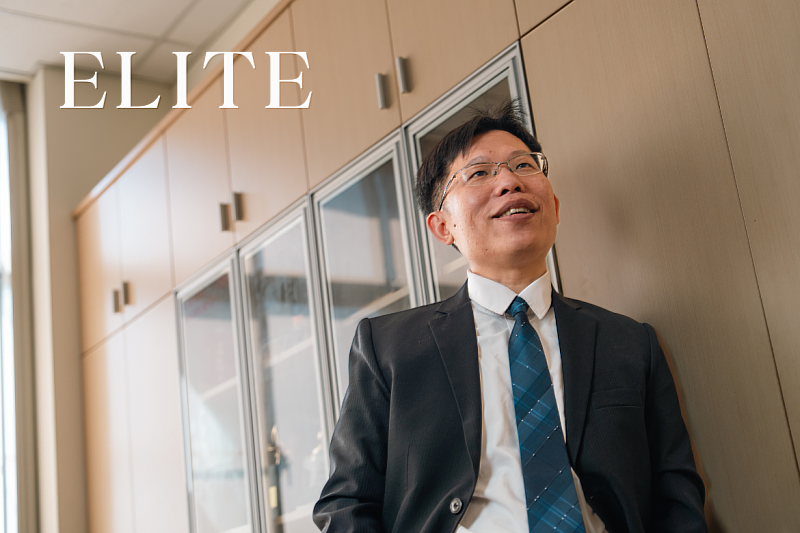
As a result, Professor Jiun-Tai Chen, Dean of the College of Science at National Yang Ming Chiao Tung University (NYCU), and the research team from the “Optoelectronic Polymer Research Group” chose to leverage their expertise in polymer materials, and successfully developed functional fabrics capable of “self-healing” after damage, aiming to significantly reduce the environmental impact of discarded textiles by extending the lifespan of textiles. This innovative R&D achievement has secured multiple novel invention patents and has been recognized with the “Future Tech Award” and the “National Innovation Award”.
Jiun-Tai Chen frankly admits that self-healing functional fabrics, which carry relatively high material and R&D costs, are better suited for high-end functional textiles such as ski jackets, mountaineering apparel, wetsuits, and even camping tents. “One no longer has to discard the entire garment just because of a small tear, and that’s the essence of sustainability.”
This seemingly magical “self-healing” process begins by mixing polymer materials with varying degrees of crystallinity with ionic liquids to form ionic gels, then processing them into artificial fibers with approximately one micrometer in diameter. “Molecules can attract each other through hydrogen bonds, electrostatic charges, or dipole interactions. We deliberately enhanced these multiple interaction forces during the material design process. Simply overlapping two broken fiber segments and applying pressure, heat, or even light can reactivate these molecular interaction forces, causing them to mutually attract and firmly bond the damaged area,” Jiun-Tai Chen adds that the ionic gel can also be coated onto conventional fabric surfaces to achieve the same self-healing effect.
However, the technical hurdles for creating an everyday garment far exceeded expectations. First, to balance waterproofing and breathability, the fabric structure must block liquid molecules from penetrating while allowing water vapor to escape freely. Jiun-Tai Chen explains, “To design this nano-level pore structure, commercially available materials often require the addition of fluorine-containing polymers. We must strive to find fluorine-free, eco-friendly alternatives and avoid overly expensive materials that inflate costs, while ensuring that the fabric retains its functionality, including skin-friendliness and comfort, and that the pores do not become blocked after fabric self-healing. It is truly challenging.”
Secondly, everyday garments must withstand repeated washing cycles. Repeated pulling and friction during cleaning, or the addition of detergents and bleach, as well as hot-water washing and high-temperature drying, can cause the coating to peel off or the fabric structure to melt and deform, compromising the restoration effect or damaging the fabric structure. Jiun-Tai Chen particularly emphasizes that the activation conditions for healing must be precisely controlled: “The material shouldn’t heal itself upon any heat exposure, but rather activate healing in specific areas under defined temperature, pressure, or light conditions.” Additionally, enhancing the durability of the healed areas, enabling multiple healed areas on the same tear, and reducing healing time are key bottlenecks the research team is actively tackling.
“The time required for healing has been reduced from several hours in the early stages to approximately one hour, with the healed strength now reaching about 70% of the original. By adjusting material ratios, we can now achieve at least ten or more cycles of repeated healing. More importantly, we continue to enhance functionalities beyond mere healing.” Jiun-Tai Chen further illustrates that after integrating weak conductivity, self-healing functional fabrics can be made into factory protective clothing. This effectively dissipates static electricity buildup, preventing sparks and significantly enhancing workplace safety. “Antimicrobial function is also a key future trend for garments!” he added. By incorporating materials like nano-gold, nano-silver, or zwitterionic compounds, etc., bacteria find it difficult to adhere and proliferate on the fabric.
The stretchable properties of clothing also inspired Jiun-Tai Chen’s R&D of “anti-counterfeiting” functions. “Common anti-counterfeiting labels only reveal their markings when exposed to polarized light, such as ultraviolet light. What we aim to achieve goes beyond labels that reveal anti-counterfeiting properties only under specific lighting angles. We want the labels to change as the label stretches, which involves extremely challenging material synthesis and structural design.” Faced with this challenge, Jiun-Tai Chen only grows more enthusiastic.
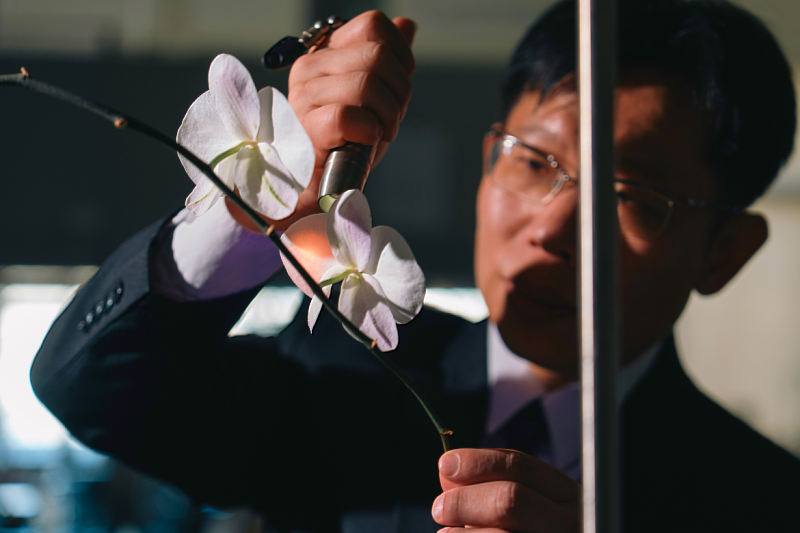
The R&D of self-healing functional fabrics aligns precisely with the “3S1A” research framework of the Optoelectronic Polymer Research Group at NYCU. "3S1A stands for Synthesis, Sustainable, Smart, and Application. We are committed to synthesizing various new materials with sustainability as our goal, integrating smart design concepts, and ultimately applying them to solve real-world problems." Jiun-Tai Chen believes that whether it's the waterproof and breathable nano-scale pore design, the mechanism that heals only specific areas, or shape memory, all are concrete manifestations of smart design.
“In the field of self-healing fabrics, we're moving very quickly. In fact, the Group is more focused on developing wearable devices that combine functional fabrics with sensors.” Jiun-Tai Chen explains that the total surface area of all holes in self-healing fabrics is extremely large, making them highly sensitive to environmental changes. If blended with pH-responsive materials to create firefighting suits, the fabric can instantly change color when toxic gases like carbon monoxide are detected at a fire scene, alerting firefighters to evacuate. On battlefields, it can also detect colorless, odorless toxic gases.
In medical settings, gauze can be enhanced with pH-responsive color-changing properties. Should a wound's pH shift due to bacterial infection, the gauze will change color to alert caregivers to replacement. Future functions may include sweat-sensing capabilities in clothing, transmitting physiological data in real-time via Bluetooth for long-term health conditions monitoring of users. Jiun-Tai Chen believes that NYCU already possesses dual R&D strengths in smart electronics and healthcare, and sensing-enabled self-healing fabrics are expected to pioneer new high-value-added applications in sports health and medical care fields.
Taking a broader view, Jiun-Tai Chen's R&D aims to integrate functional sensing fabrics with AI and robotics. For instance, by imparting conductive or piezoelectric properties to fibers, self-healing functional fabrics can transform into “electronic skin” capable of instantly sensing pressure, temperature, and touch. “Robotic fingers are typically made of metal, which feels cold and lacks tactile sensation. Covering them with electronic skin enables them to discern the hardness or softness of objects they touch and provide feedback when touched.” Jiun-Tai Chen analyzes that realistic sensing technology not only enhances the safety of human-machine interaction mechanisms but may also help burn patients who have lost their tactile sensation regain their sensory abilities in the future.
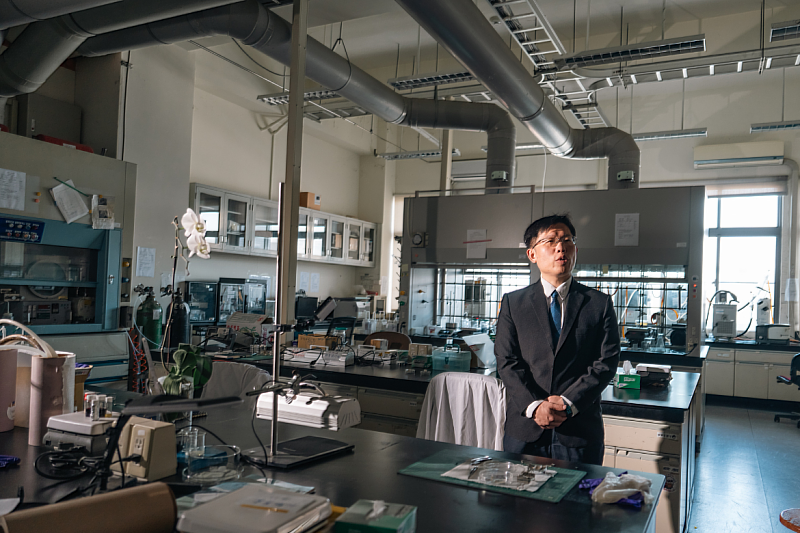
Currently, Jiun-Tai Chen's research team is actively advancing toward practical applications and mass production through close collaboration with domestic and international research institutions and industry partners. For instance, the Group is working with the Industrial Technology Research Institute (ITRI) to transform recycled PET bottle materials into elastic and functional polymer fibers. It is also collaborating with the Taiwan Textile Research Institute (TTRI) on testing and certifying functional fabrics. Furthermore, the team has initiated collaboration with Taiwan Semiconductor Manufacturing Company, Limited (TSMC), the leading semiconductor company in Taiwan’s semiconductor industry. Jiun-Tai Chen indicates, “Although the industries and application fields differ, the underlying principles are interconnected. TSMC pursues nanoscale precision in structural design, while our expertise in polymer nanostructures and photoresist material properties aligns perfectly with their requirements.”
In the international connections, Jiun-Tai Chen has established close ties with Germany's premier research team specializing in “responsive smart polymers.” Through student exchange programs, the collaboration focuses on the synthetic design of environmentally friendly polymeric materials. Additionally, the Group maintains robust partnerships with prestigious institutions, including Princeton University in the United States, Tohoku University, and Hokkaido University in Japan, thereby progressively building a transnational materials R&D network.
Looking ahead, Jiun-Tai Chen continues to seek collaboration opportunities with textile mills and contract manufacturers while encouraging his students in the Group to leverage the Ministry of Economic Affairs' entrepreneurial resources to establish startups and advance this technology toward industrialization. He outspokenly emphasizes that the key to successful industry-academia collaboration lies in introducing environmentally friendly, low-cost new materials and functionalities without significantly altering existing textile processes. This approach lowers the barrier to industrial transformation, paving the way for true mass production.
Taiwan, hailed as the “Kingdom of Textiles,” faces an urgent need for transformation amid industrial relocation and environmental policies, such as the internationally levied carbon tax. The innovative research of Jiun-Tai Chen paves a sustainable path for the textile industry—one centered on materials science, integrated with smart sensing and eco-design, and poised to capture high-value-added blue ocean markets.
“Adding functionality will certainly increase costs, but with today's strong public awareness of environmental protection, more and more consumers will recognize the sustainable value of self-healing functional fabrics,” Jiun-Tai Chen stated with confidence.