




- NYCU unveils newly designed academic regalia created by Paris Olympics fashion designer Justin Chou
- NYCU and Miaoli County Government sign MOU to establish new Miaoli Campus
- AI and Semiconductor Boom Drives Fierce Competition for NYCU Graduate Programs
- NYCU 2025 ICT Open Labs Turn Student Innovation into Real-World Action
- NYCU Opens New Indigenous Student Resource Center Space
From the Tribe to the World: NYCU’s Holistic Health Partnership in Nan’ao
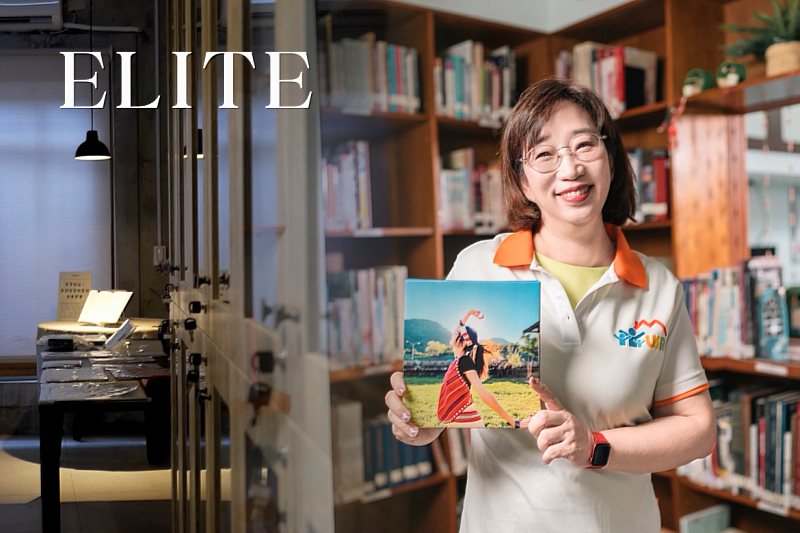
(中央社訊息服務20251231 11:51:33)In the early morning mist of Nan’ao, the local Culture and Health Station is already alive with energy. One by one, community elders gather, accompanied by a familiar melody—the "Medication Song." Hummed in Atayal, the tune gently reminds them of their daily medical routines. This scene is the fruit of a deep collaboration between Professor Yiing-Mei Liou (Institute of Community Health Care, NYCU) and the Nan’ao community. What began as a health initiative has evolved into an integral part of the elders' daily lives.
In recent years, NYCU has woven Atayal language, culture, smart technology, and community care into a unique healthcare model known as iHEART (Tribal star incubation: Intelligent HEAlth for RemoTe areas). From translating medication instructions into Atayal and integrating them into music therapy to digitizing daily health records, the program helps indigenous communities build a compassionate, culturally grounded approach to wellness. While the project has earned prestigious accolades—including the Gold Award at the TSAA Taiwan Sustainable Action Awards and the Bronze Award at the APSAA Asia-Pacific Sustainable Action Awards (SDG3)—Professor Liou insists the true value lies elsewhere.
"We are not here to help the community," Professor Liou emphasizes. "We are here to find solutions together with the community."
The project began with a simple but critical realization: the need to truly see. Professor Liou recalls that upon arriving in Nan’ao, the team looked beyond statistics like gout prevalence or dialysis rates. Instead, they saw health challenges hidden within cultural nuances and linguistic gaps.
For many elders, medication bags were "all Greek to them"—unreadable and intimidating. Some elders would even pour colorful pills into glass jars for display simply because they looked "beautiful," unaware of their medical function. Moments like these revealed a profound insight: when health information cannot be understood, it cannot be used. Thus began a transformative cross-cultural translation effort. The team and the community worked together to translate medical terms into Atayal, turn shyly whispered reminders into songs, and encode health messages into dance.
Beyond education, the NYCU team collaborates with the Culture and Health Station to provide holistic physical and emotional support. From morning mobility exercises to shared community meals, these activities have become cherished "homecoming moments."
"Here, health education isn't about handouts; it is woven into daily life so elders can remember through movement," shares Ms. Lu Zifang, a care attendant at the station. She notes that the "Medication Song," which blends melody with simple choreography, aligns with the community’s oral traditions. "When the elders hear the song, they immediately know how to take their medicine for the day."
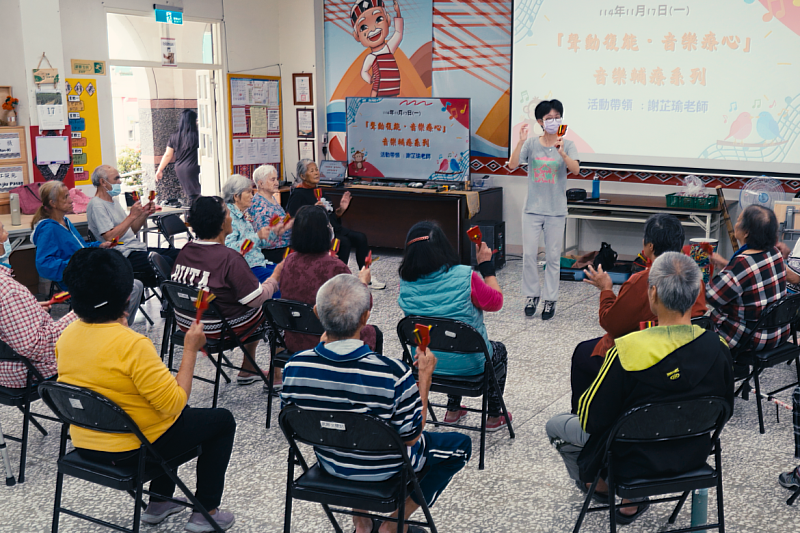
Recent years have seen NYCU interns identifying deeper emotional needs, leading to the introduction of music-based therapy to help elders find balance through rhythm and breathing. However, the COVID-19 pandemic presented a more urgent challenge: a shortage of masks and a community in fear.
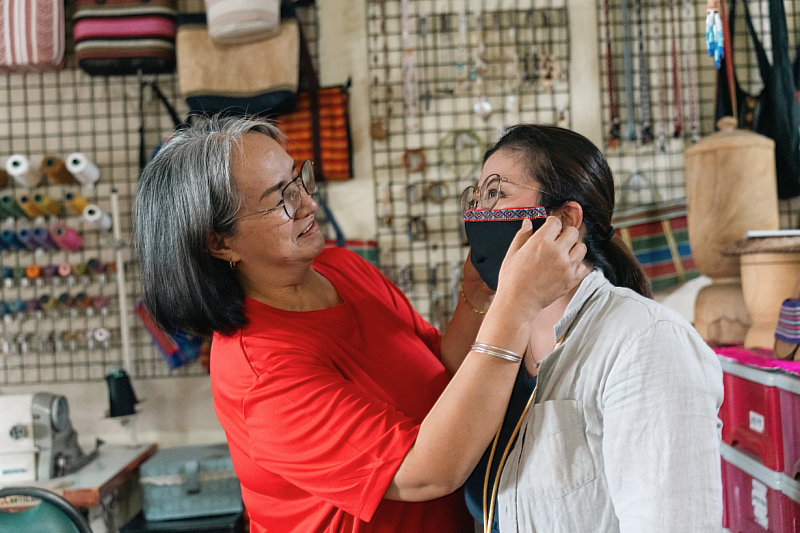
During the COVID-19 pandemic, Nan’ao faced a series of challenges: an influx of young people returning home, elders worried about infection, and a severe shortage of masks. Recognizing the community’s urgent needs, the NYCU team partnered with the Ina Weaving Workshop to develop a solution grounded in local culture. "If there aren’t enough masks, we’ll make them ourselves," said Ms. Hu Su-Chiu, the weaving artisan, with gentle determination.
The resulting "Nan’ao Mask" combined NYCU’s medical expertise with Atayal identity. The woven bands carried deep symbolism: mountain motifs for the forests, plain-weave for the earth, and diamond shapes representing the "eyes of the ancestors." "If it is made by me, then it is part of Atayal tradition," Ms. Hu said with pride. Here, culture is more than aesthetic expression—it becomes a form of protection. At the height of the crisis, the NYCU team and the Ina Workshop demonstrated the community’s collective resilience, producing and distributing 300 masks to the township office and frontline medical staff, standing together to safeguard the well-being of the tribe.
"Nan’ao’s emergence as a hub for health innovation is no coincidence," says Professor Liou. Each year, NYCU students spend time stationed in the community, conducting health assessments, supporting older residents, and collaborating with the local health clinic. While their work may appear to be “service,” the students gain far more in return—learning about culture, building relationships, and experiencing the power of trust. Little by little, the community has opened its doors and allowed NYCU to become part of its everyday life.
Professor Liou shares a touching story of a student driven up the mountain by the Public Health Center director. Noticing the student hadn’t eaten, the director took a steamed bun, divided it by hand, and shared it, saying, "Family must share." For the student, it was a lesson that public health is built on relationships, not just professional guidance. As many interns reflect, "This was the most authentic public health class of my life."
When asked whether the Nan’ao model could be replicated elsewhere, Professor Liou believes that while the “methods” may be difficult to copy, the “spirit” can be. She emphasizes that what Nan’ao has done right is not about technology, but about an attitude—willingness to listen, to wait, and to sit alongside the community, allowing it to set its own pace.
What may seem like a local issue of rural health actually embodies the core of the global Sustainable Development Goals (SDGs). As Professor Liou explains, "The ultimate aim is to eliminate all forms of poverty." Liou explains. "Language barriers create knowledge poverty, while a lack of cultural understanding creates dignity poverty." By addressing both, NYCU and Nan’ao have built a model that is globally comprehensible yet locally actionable. "Giving is not losing; it is a path toward deeper understanding," Professor Liou concludes. "As long as you are willing, you will find more people willing to walk alongside you."
Though Nan’ao is small, NYCU has invested time and humility to cultivate deep understanding—building trust through companionship and insight, and offering the world a model that is globally comprehensible yet locally actionable. “Giving is not losing; it is a path toward deeper understanding. As long as you are willing, you will find more people willing to walk alongside you,” says Professor Ying-Mei Liou. The story of Nan’ao continues, and the seeds sown by NYCU and the community are already taking root and growing, reaching ever farther.