




- NYCU Team Develops High-Efficiency Distributed Propulsion VTOL UAV
- NYCU Partners with Stanford and Leading U.S. Universities to Send Students into Silicon Valley Labs
- Eight NYCU Professors Receive NSTC Outstanding Research Award
- NYCU Congratulates Prof. M.C. Frank Chang on Receiving the 2025 John Fritz Medal
- Expedition of the NYCU Mental Guts Service Team: Seeing Beyond Medical Records to See People
NYCU to Install Taiwan’s First Human 7-Tesla MRI, Opening a New Era for Brain Science Research
(中央社訊息服務20260305 09:44:09)National Yang Ming Chiao Tung University (NYCU) is set to install Taiwan’s first human 7-Tesla (7T) magnetic resonance imaging (MRI) system at its Bo-Ai Campus, marking a major milestone for the country’s medical imaging capability and brain science research. The cutting-edge facility is expected to significantly enhance Taiwan’s capacity in clinical medicine, neuroscience, and cognitive research, providing scientists with an unprecedented platform to explore the human brain with extraordinary precision.
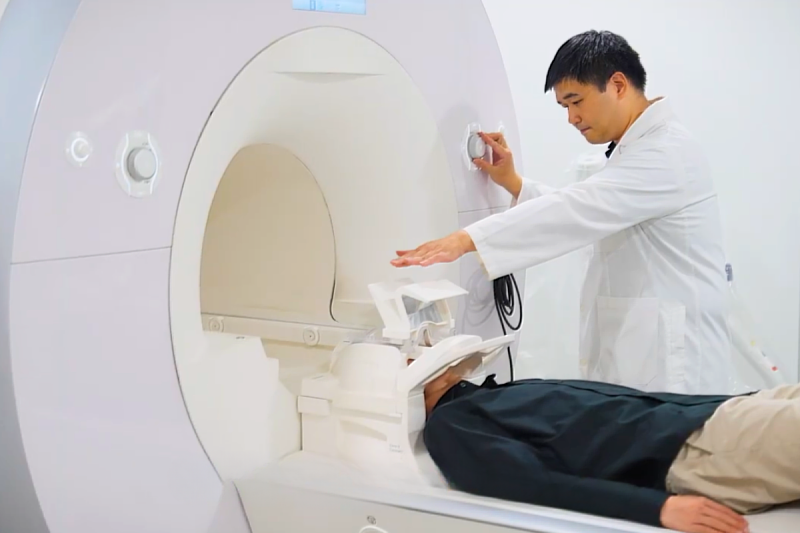
Since its introduction in the 1970s, MRI has become one of the most essential tools in modern medical diagnosis and research. Today, most hospitals rely on 1.5-Tesla MRI scanners for routine clinical imaging, while 3-Tesla systems are widely used in advanced research settings.
The 7T MRI system planned by NYCU offers a much stronger magnetic field, dramatically improving image resolution and signal-to-noise ratio. This enables researchers to observe the body’s microstructures and pathological changes with far greater clarity than before.
As a result, subtle brain abnormalities that were previously difficult to detect—such as microbleeds, microvascular lesions, delicate neural structures, and fine-grained brain activity patterns—can be captured and analyzed with unprecedented detail. Researchers expect this capability to open new avenues for understanding neurodegenerative disorders, psychiatric conditions, and the functional architecture of the brain.
For medical imaging scientists, increasing magnetic field strength represents more than a technological upgrade—it fundamentally expands research capability.
NYCU President Chi-Hung Lin said the university’s earlier installation of a 3-Tesla MRI had already generated a significant impact across multiple research fields. The addition of a 7-Tesla system, he noted, will play an even more transformative role.
“Because we have previously built and operated a 3-Tesla MRI system, we have seen how profoundly it can influence research across the university,” Lin said. “At this moment, investing in a 7-Tesla MRI is meant to serve as a locomotive—driving NYCU forward in brain science research, particularly in interdisciplinary work that connects neuroscience with the humanities and social sciences.”
NYCU has long been known for integrating medicine, engineering, and advanced technology. The introduction of the 7T MRI is expected to further strengthen collaboration between clinicians and engineers, enabling cutting-edge imaging technologies to translate more rapidly into clinical insights and scientific discoveries.
According to Shuu-Jiun Wang, Dean of the NYCU College of Medicine, traditional imaging methods still have limitations in studying complex brain disorders.
“From CT scans to 1.5-Tesla MRI and even 3-Tesla MRI, we have always been trying to understand what exactly is happening in the brain,” Wang said. “Many functional disorders may occur within extremely small nuclei or neural circuits, and current imaging technologies cannot always visualize them clearly enough.”
Recent international studies suggest that ultra-high-field 7T MRI can reveal microscopic structures and pathological changes that were previously beyond the reach of conventional imaging techniques, offering researchers a powerful new window into brain function and disease.
Wang emphasized that the true value of the technology will ultimately depend on how researchers and clinicians use it. “Scientists around the world are exploring what this kind of machine can truly contribute to humanity,” he said. “If we do not have the opportunity to explore it ourselves, we will never know its value. And that value is something we create together.”
With its strong foundation in clinical medicine, engineering, and interdisciplinary science, NYCU aims to turn the new 7T MRI facility into a major hub for brain science and precision medicine research in Taiwan.
Supported by international collaborations and a new generation of emerging researchers, the facility is expected to become an important national research infrastructure.
President Lin said the project represents not only a significant investment for the university but also a step toward strengthening Taiwan’s global scientific presence.
“NYCU brings together outstanding teams in clinical medicine and engineering, world-class partners, and a new generation eager to engage with the world,” Lin said. “Now we must work together to bring Taiwan onto the global stage and light the way for the next generation.”
From 1.5T to 3T and now to 7T, the advancement is not simply an increase in magnetic field strength. It represents a new bridge toward ultra-precise medicine and deeper exploration of the human brain.
With Taiwan’s first 7-Tesla MRI set to be installed at NYCU’s Bo-Ai Campus, the nation’s medical imaging and brain science research are poised to enter a new era.