

KMU Signs Collaboration Agreement with Kumamoto University, Japan
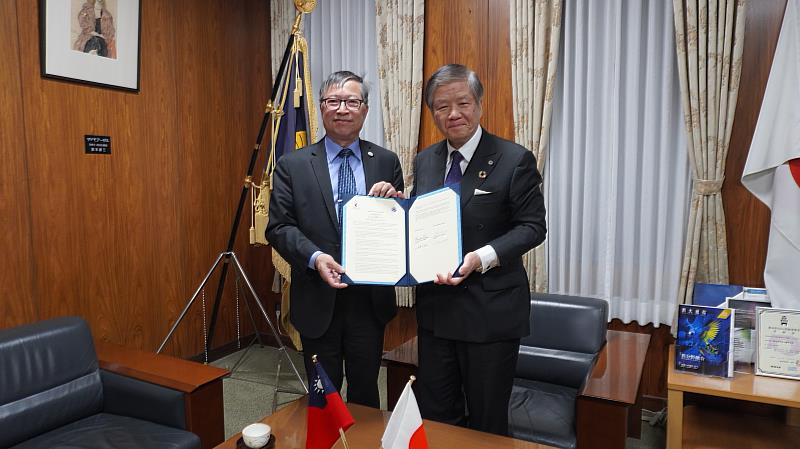
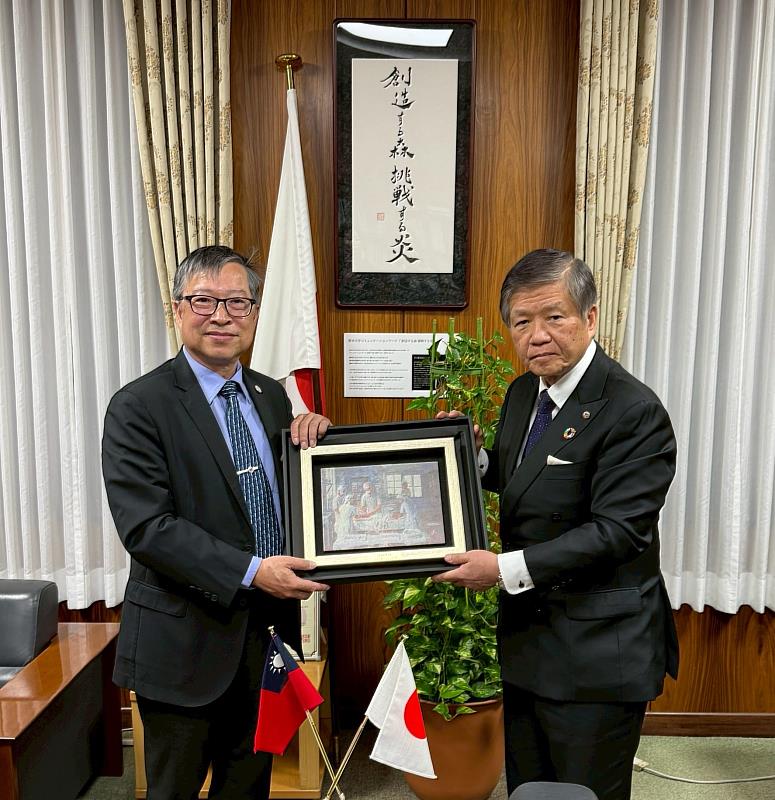
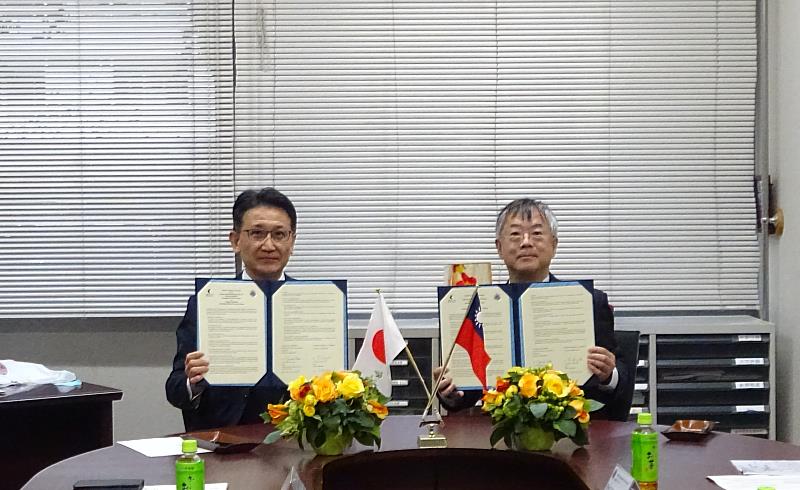
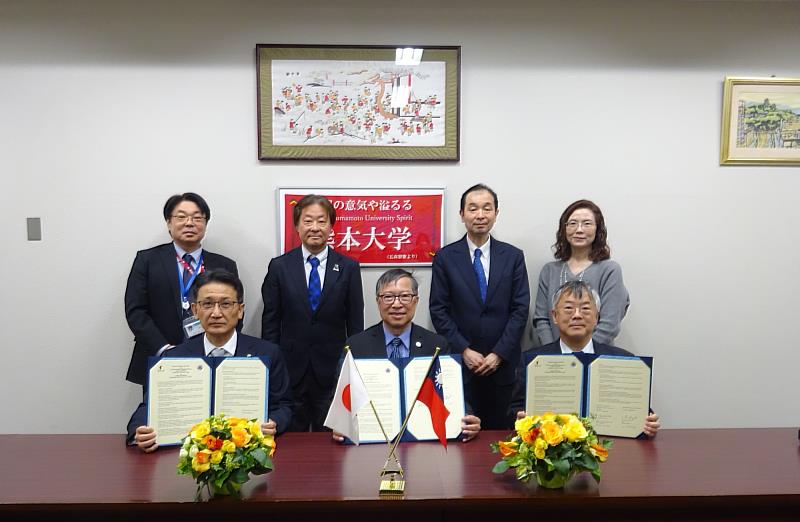
(中央社訊息服務20251127 16:22:39)Kaohsiung Medical University (KMU) has been actively expanding its internationalization efforts in recent years, steadily increasing opportunities for students to participate in overseas clinical electives and research exchanges. KMU President Ming-Lung Yu recently led a delegation to Kumamoto University in Japan, where he and Kumamoto University President Prof. Hisao Ogawa jointly signed a Memorandum of Understanding on Academic Collaboration. The deans of both universities’ colleges of medicine also signed a Student Exchange Agreement between two colleges, officially launching a new chapter in bilateral cooperation in medical education, clinical training, and research—marking a significant milestone in Taiwan–Japan medical collaboration.
Kumamoto University has a long and distinguished history. One of its predecessor institutions educated Shibasaburō Kitasato, a pivotal figure in modern Japanese medicine whose seminal contributions to infectious diseases and public health laid the foundation for Japan’s medical research; he is also featured on Japan’s 1,000-yen banknote. President Hisao Ogawa previously served as President of the National Cerebral and Cardiovascular Center (NCVC), demonstrating Kumamoto University’s leadership in advanced clinical and translational research. This partnership also continues the warm relationship between Kaohsiung City and Kumamoto City, which established sister-city ties in 2017, further affirming the enduring friendship between Taiwan and Japan.
President Yu noted that academic collaboration between the two universities began with the joint research in liver diseases and metabolic-associated fatty liver disease (MAFLD), with multiple scholarly exchanges building a strong foundation of mutual trust. After meeting again at the Japan–Taiwan University Presidents’ Forum in July this year, both universities accelerated discussions on deepening collaboration and promoting student mobility. He emphasized, “Today’s agreement symbolizes a formal partnership and marks the beginning of even closer cooperation in research, education, medical innovation, and talent cultivation. By working together, our two universities can create meaningful impact—developing medical professionals with global vision and contributing to the well-being of both our societies.”
Dean Po-Liang Lu of KMU’s College of Medicine highlighted that the college has long been committed to global engagement, currently offering 70 EMI (English-Medium Instruction) courses and maintaining partnerships with leading medical institutions such as Harvard Medical School, Kyoto University, Seoul National University, and the National University of Singapore. Students are regularly sent abroad for clinical electives. With Kumamoto University now joining the network of partner institutions, KMU students will have new opportunities to learn and train in Japan’s excellent clinical and research environments.
The two universities also recognized their complementary strengths in infectious disease and virology research. Kumamoto University is home to Japan’s leading Joint Research Center for Human Retrovirus Infection, internationally renowned for its work on HIV-1, HTLV-1, HBV, and related fields. KMU likewise possesses strong capabilities in infectious disease and viral research. The partnership is expected to promote closer collaboration in both basic and clinical research, contributing to innovation and the advancement of major infectious disease prevention strategies.
In addition, both universities held preliminary discussions on establishing dual-degree programs, aiming to strengthen research collaboration and develop more comprehensive global medical training pathways—providing new opportunities for cultivating high-level international medical talent.
KMU stated that they will continue to expand their partnership with Kumamoto University, jointly building an internationally influential platform for medical education and research, enabling students to broaden their global perspectives while fostering progress in medical science, health, and social well-being across Taiwan and Japan.